
Lumpkin County Busted Mugshots: What They Mean
Booking starts when an arresting agency hands a person to jail staff at the Lumpkin County Detention Center. The Sheriff's Office keeps the intake records. Who made the arrest varies. It could be Dahlonega Police, University of North Georgia Police, the Georgia Bureau of Investigation, Georgia State Patrol, or another agency entirely. A mugshot is just an ID photo taken during processing.
Different offices hold different pieces of the paper trail. The arresting agency keeps the incident report. LCSO holds the jail booking and custody record. Its public LCSO Inmate Check gives a narrow view of current or date-specific custody. Courts keep the later case history. Georgia's booking-photograph statute limits what an arresting agency may post on its own site, so a custody row never promises a photo.
The portal shows name, race, sex, age, cell block, arrest date, and hold information. There is no public mugshot column. It is a records doorway, not a gallery. When a photo or full intake sheet truly matters, send a focused request to the custodian, then follow up with the court file for the outcome. The captured LCSO custody search shows the exact fields used to check current or selected-date detention status.
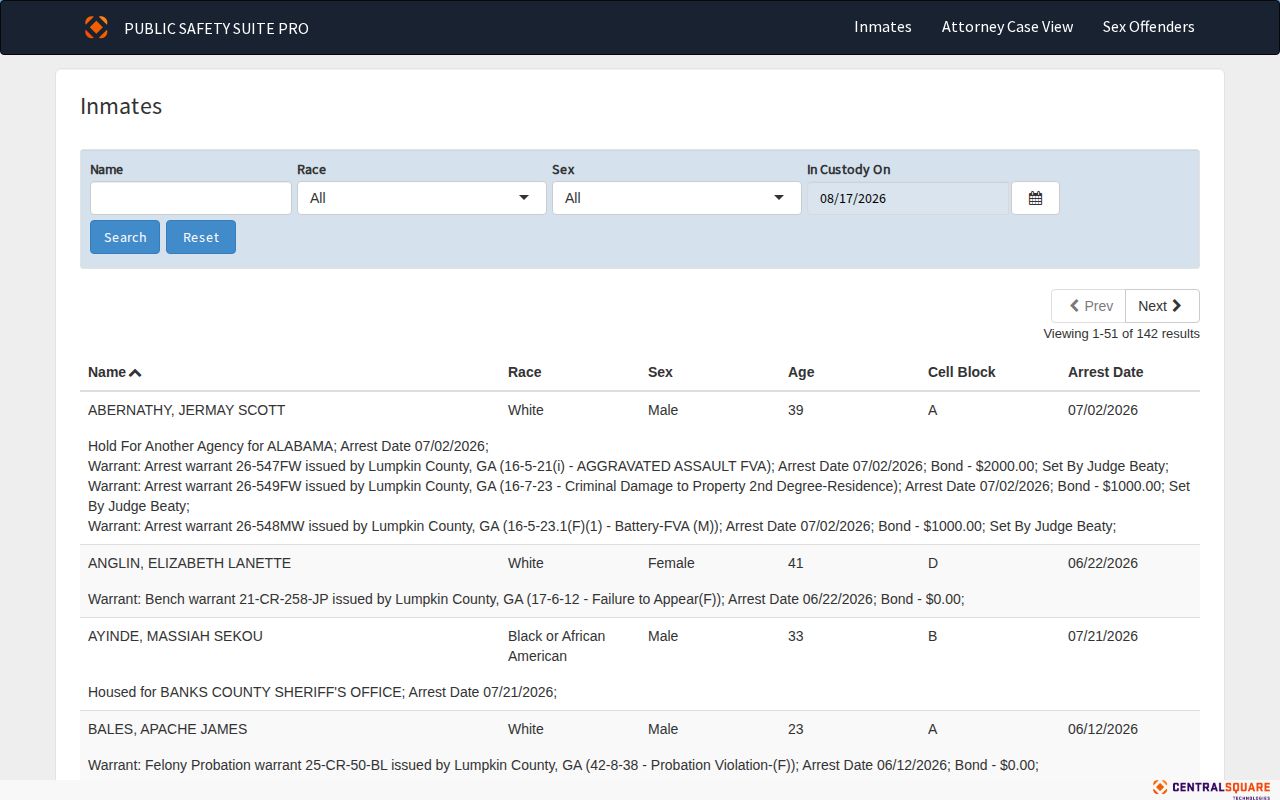
The interface works well for one purpose. It can confirm whether someone is currently held in the county jail.
What a booking photo actually is. A mugshot, charge, warrant, or booking entry marks a custody event at the jail. The court file tells the rest of that story.
What Lumpkin County Booking Records Show
The online custody row is thinner than the jail file behind it. Lumpkin's live system shows name, race, sex, age, cell block, arrest date, and hold reasons. An "In Custody On" control lets you pick a specific date. That date marks a custody event, nothing more. It will not reveal whether a prosecutor amended the case or a judge entered a final ruling.
| Field | What it shows or means |
|---|---|
| Name | The identity string returned by the public custody portal. |
| Race and sex | Configured identity filters that can help narrow a name search. |
| Age | An age derived from the date of birth in the portal configuration. |
| Cell block | A current cell-assignment field that can change and is not a sentence or danger rating. |
| Arrest date | The date associated with the intake or custody event shown by the system. |
| Hold reason | A custody or hold label, not necessarily a final court charge. |
| Booking number, bond, court date | These may belong to the underlying intake or court records, but are not all public columns in the observed roster. |
| Photograph | No booking-photo field is exposed in the county portal as configured on August 16, 2026. |
| Facility | The accepted-custody location is the Lumpkin County Detention Center for this jail system. |
The full booking file can run much deeper. An intake record may include an identity number, the holding agency, fingerprints, personal property, received charges, bond or hold status, jail placement, and release or transfer details. Georgia Archives describes jail booking records as associated booking data. That does not guarantee every field exists in each Lumpkin record, or can be released. Medical, victim, juvenile, restricted, investigative, and security material may be withheld or redacted.
Note: The public roster's arrest date identifies a custody event, but it does not supply a court disposition or prove a final charge.
How to Request Lumpkin Booking Records
When the roster is too narrow, a person has already been released, or you need an existing booking photograph, turn to the LCSO Open Records Request form. Ask for records that already exist. One person's name and a bounded date range give the records unit far less to dig through than a blanket demand for a custom list of faces.
Christina Wise serves as Open Records Specialist, reachable at 706-482-2634. The Sheriff's Office and Detention Center share an address: 385 East Main Street, Dahlonega, Georgia 30533. Administrative report service runs 8 a.m. to 5 p.m., Monday through Friday. Detention questions go to 706-864-0412. Emergencies belong with 911.
The form's own language promises available records within three business days, or a timetable when that is not possible. Fees may cover the lowest-paid qualified employee's time past the first 15 minutes, plus copying or supply costs. No flat Lumpkin County booking-photo fee exists. The official request form spells out exactly what the custodian needs for a precise search.
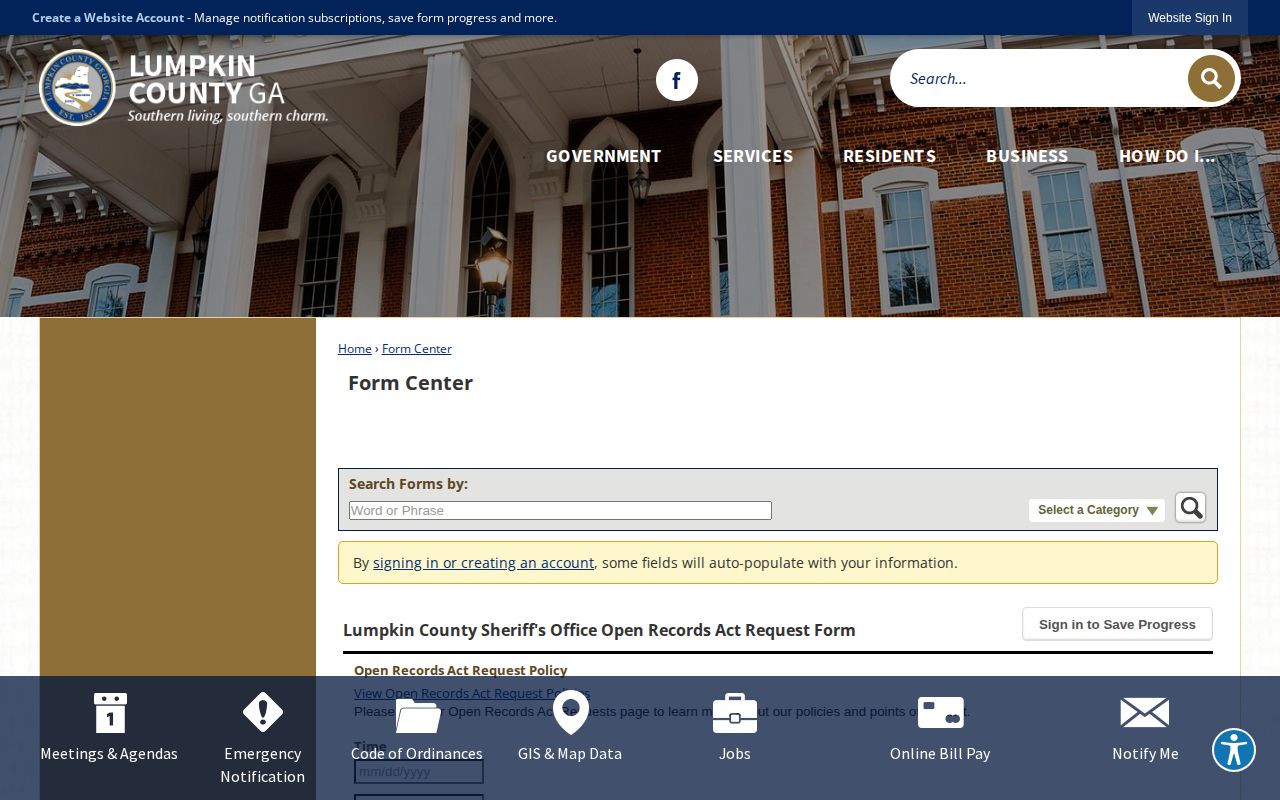
Treat the form as your records channel. Keep the response, along with the name, date, case number, and any exemption cited.
- Give the person's full name, the approximate arrest or booking date, and the location. Add a case or booking number when known.
- Ask for the existing jail booking or intake sheet and the associated booking photograph in its native electronic format, if available. Include the compliant-use statement requested under O.C.G.A. § 35-1-19(d).
- Include contact details so the office can discuss scope, timing, redaction, and estimated cost.
- Allow the three-business-day response period. The first response may give a production timetable instead of the finished record.
- If material is withheld, ask for the precise statutory exemption and any segregable portion that can be released.
A Dahlonega arrest report follows the police department's own records process. The jail intake sheet and any photograph belong with LCSO. The detention center controls that custody record. Also, a request never obligates an agency to create a new report, merge separate databases, or post an image online.
Georgia Mugshot Law and Busted Photo Rules
Georgia's Open Records Act, O.C.G.A. §§ 50-18-70 et seq., gives anyone a way to ask for records that already exist. Some things stay exempt. Agencies can redact. The Georgia Attorney General's Open Government FAQ covers the three-business-day response window, copy costs, labor limits, and one point people often miss: an agency does not have to build a custom compilation just because you asked for it.
Booking photos get their own statute. O.C.G.A. § 35-1-19 generally bars the arresting agency from posting a booking photograph online, with statutory exceptions. It also clamps down on removal arrangements that depend on payment or other consideration, and it requires a requester declaration for compliant use. Read it as a limit on agency publication and pay-for-removal pipelines. It does not make every booking photo confidential, and it does not force LCSO to post one.
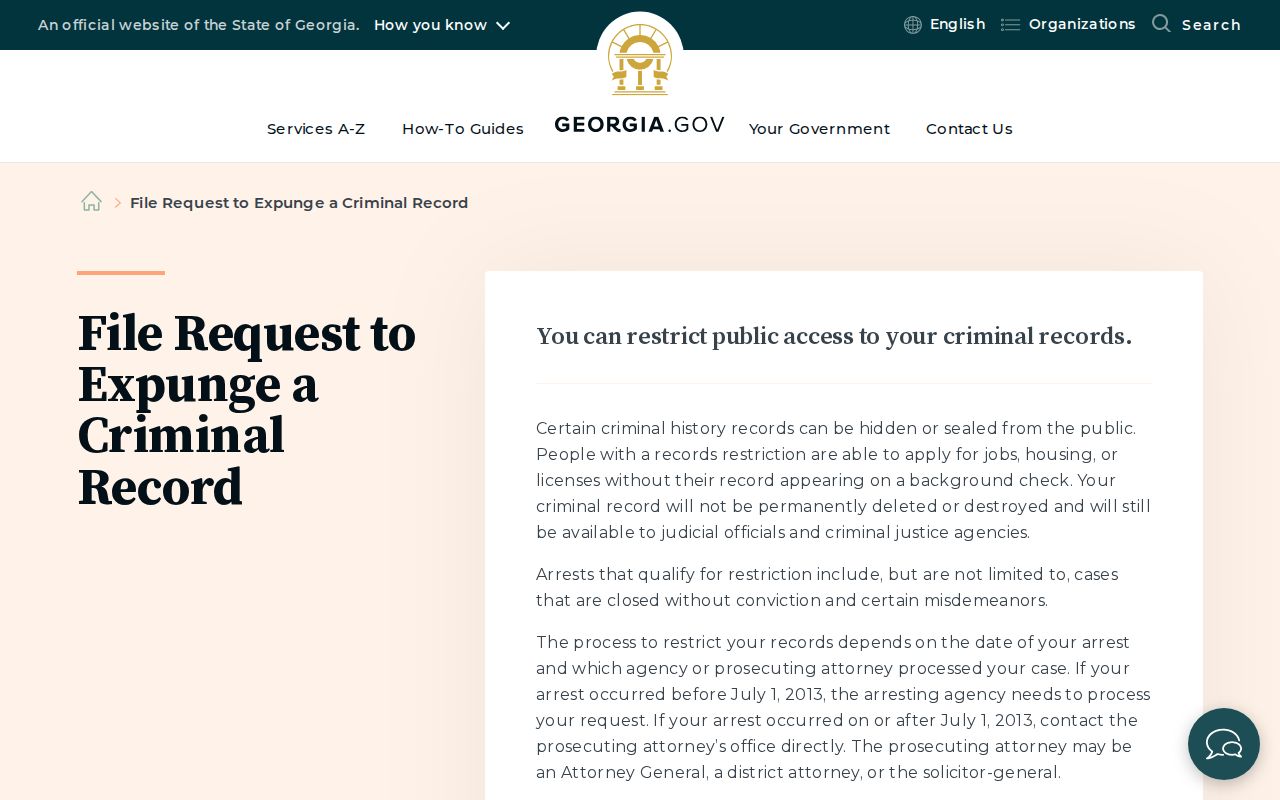
Expungement in Georgia mostly goes by another name: record restriction. Under O.C.G.A. § 35-3-37 and the GBI guidance, newer arrests generally start with the prosecutor. Older ones run through the arresting agency. Dismissal, nolle prosequi, dead docket, or no further action can all qualify. Restriction narrows public criminal-history access, but it does not wipe out every government copy or old republication.
Check the Georgia record-restriction guide before assuming eligibility, since 2026 legislation changed the first-offender rules. Juvenile files, sealed material, victim information, medical records, investigative files, and jail-security data carry their own special limits. One more tip: if a court disposition is missing, fix that with the court or prosecutor first. Downstream records will not change on their own.
Publisher takedowns are a separate track from the official record. RecentlyBooked offers a free review for qualifying dismissal, restriction, identity, juvenile, duplicate, or inaccuracy claims. Mugshots.com says qualifying updates or removals are free, though documentation may be required. Neither is a legal order. Treat any payment demand with caution, because Georgia's statute targets publication arrangements that make removal hinge on consideration.
Statute pointer. O.C.G.A. § 35-1-19 restricts arresting-agency website publication and certain publication-for-consideration deals, but it stops short of making every booking photograph confidential.
The Georgia record-restriction guide walks through the state process, though it makes no promise that an old booking image will vanish.
Work from the source outward: start with the originating agency and court, use any lawful publisher process, and try Google's Refresh Outdated Content process only after the source itself has changed.
Lumpkin Juvenile and Withheld Records
Age alone does not settle whether a record is viewable. Ordinary juvenile criminal-history records get special protection, yet they are not purged automatically. Per the Georgia Department of Juvenile Justice, a qualifying person may petition to seal during the calendar year they turn 17, once the case is inactive and statutory conditions and court review are satisfied.
Serious cases moved into adult court can follow a different access rule entirely. A juvenile or protected case may never appear in the public LCSO roster. Sealed or restricted material is not just a search result that went missing. Booking files may also withhold or redact victim details, medical information, investigative files, and jail-security data.
For the current rule, use the Georgia DJJ records guidance. Then ask the court or records custodian about the specific case. Do not assume that a person's age, a blank roster line, or a third-party post means a protected record was destroyed.
Lumpkin Record Restriction After a Busted Arrest
Georgia handles most nonconviction relief through record restriction. The path depends on when the arrest happened. Under O.C.G.A. § 35-3-37, an arrest after July 1, 2013 generally begins with the prosecutor, while older arrests usually start with the arresting agency and the GBI process. Several outcomes can qualify. Dismissal, nolle prosequi, dead docket, no further action, or no disposition on file all count. Eligibility still depends on the statute, the case history, and prosecutor or court review.
Restriction limits public criminal-history access. That is all it does. It does not guarantee destruction of every government copy, court file, news report, old image, or search cache. A missing or wrong disposition may need correcting at the court first. Once that is fixed, the restriction request can advance. Denials can be appealed to Superior Court within the window the law allows, and current fees plus the 2026 first-offender changes are worth confirming before expecting any outcome.
The GBI restriction guidance notes that a complete approved application typically takes two to three weeks at GCIC. That estimate is administrative only. A publisher or search engine will not necessarily drop its copy the same day.
Find Lumpkin County Busted Mugshots
Every good lookup starts with custody status. The person might be in the county jail right now. Or they may have been released before your search, sentenced to state custody, held federally, or tied up in a court case the roster never shows. Lumpkin County publishes no official chronological recent-bookings feed. So an empty current row proves nothing about whether an arrest happened.
Keep the record question and the photo question separate, and follow this order.
- Search the LCSO Inmate Check by name and use “In Custody On” when a selected date matters. The county configuration does not show a booking photo.
- If the person was released quickly, call detention for an urgent custody question and file a narrow LCSO records request for the booking or intake record.
- For a Dahlonega event, request the police incident or arrest report from DPD. Use LCSO for county jail acceptance, booking paperwork, and the associated jail photo.
- Check the recurring FetchYourNews arrest reports as a secondary news source. Its images and reports are identified as LCSO supplied, but the publisher is not the custodian or the court.
- If the person was sentenced into state prison, search Georgia Department of Corrections. A state profile photo is not automatically the Lumpkin booking photo.
- Move to the court record for the disposition. If the matter is federal or immigration custody, use the separate locator that matches that custody state.
That sequence beats trusting every result tagged "mugshots" as current. A roster row answers who is in custody. A booking record answers the intake facts. A court file answers what became of the charge.
Where Lumpkin Busted Mugshots Appear
Lumpkin County takes an odd path here. The official custody roster shows no photo column, and the county runs no separate booking feed either. Official channels come first in the table, followed by the thin local secondary coverage that exists.
One of those outlets is the RecentlyBooked Lumpkin page. It is a genuine local section, though it plainly states that Lumpkin County does not release mugshot images.
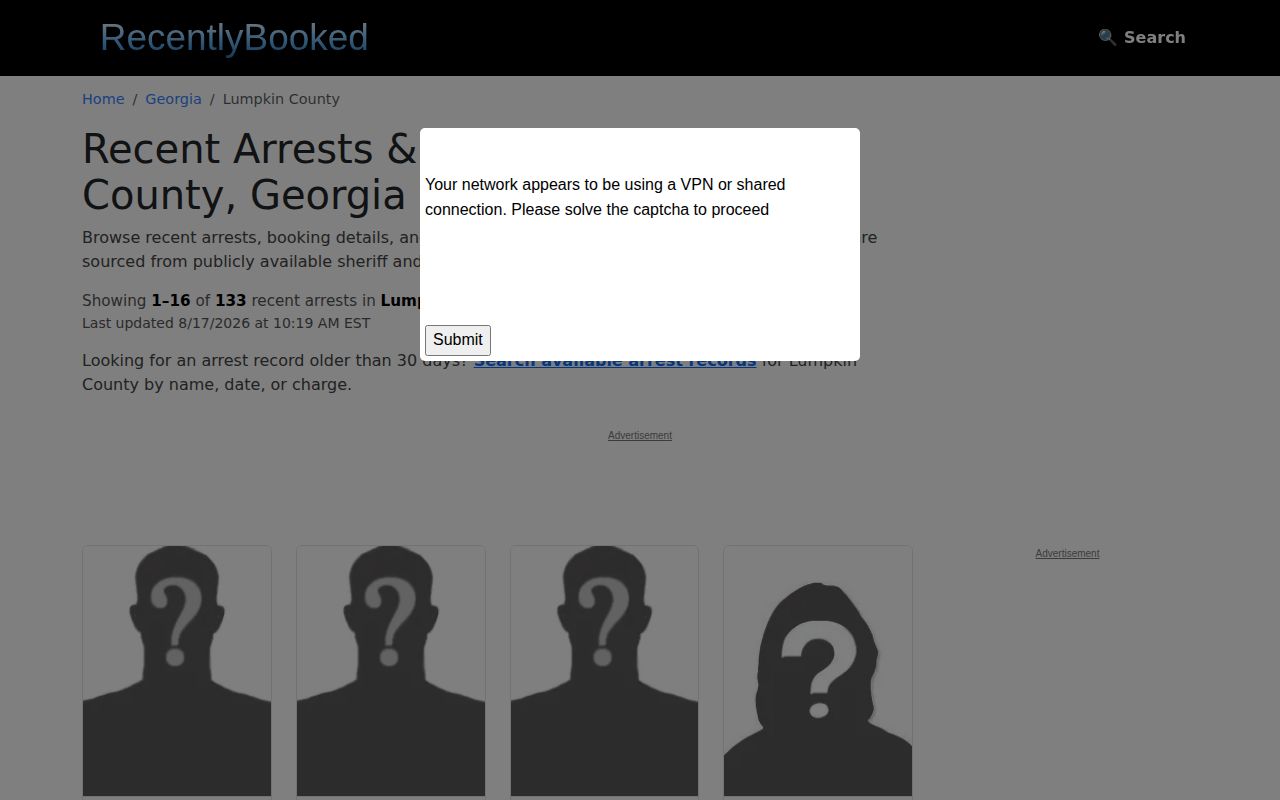
The entries there can still help you pin down an arrest date or a charge label. Treat them as leads only, and confirm anything you find with the Sheriff's Office or the court.
| Channel | Photo and authority | How to use it |
|---|---|---|
| LCSO Inmate Check | No public photo in the observed configuration; official custody view. | Search current or selected-date custody by name, race, sex, or custody date. |
| LCSO records request | An existing intake sheet or associated photograph may be requested; official custodian. | Use the form with a name, date, and case or booking number. |
| Recent-bookings feed | No official 24/48-hour or 72-hour/weekly feed was identified. | Use the roster, detention line, and records request instead. |
| FetchYourNews | Weekly reports can show photos; unofficial publisher says LCSO supplied them. | Use date windows as a lead, then verify custody and disposition. |
| GDC Find an Offender | Some state profiles have photos; official state custody source. | Use only for the sentenced-prisoner slice, not ordinary county pretrial custody. |
| Court records | Usually case documents rather than booking photos; official outcome source. | Use the Clerk and Georgia Courts e-access route for filed events and disposition. |
| RecentlyBooked | Unofficial local index that says no Lumpkin images are supplied. | Use as a secondary date or charge lead, not proof of outcome. |
| Mugshots.com | Legacy local archive with old images; unofficial and apparently stale. | Its Lumpkin taxonomy shows years through 2022, not a current feed. |
No verified Lumpkin section exists for Busted Newspaper, Arrests.org, or Mugshots.zone. A guessed web address, a shared surname, or a page from a neighboring county is not a local source, so don't lean on those.
For ongoing news coverage tied to the area, Arrest News collects the recurring local archive and event-driven regional reporting. Start with the official custody and court lookups first.
Busted and Booked: Lumpkin Jail Roster Fields
The Lumpkin Inmate Check is the Sheriff's Office tool for current custody. It will also let you query who was in custody on a chosen date. Beyond that, the county publishes little: no oldest searchable date, no refresh interval, no promised delay, and no rule for how long entries stay online. What Lumpkin enables is narrower than the vendor's full documentation suggests.
One caution about the interface. Search fields and displayed columns are two different things, so a value may narrow a query yet show up only in the results. Here is what the county has switched on:
| Roster control or column | Lumpkin County use |
|---|---|
| Name | Primary person search and result identity. |
| Race | Optional filter and displayed demographic field. |
| Sex | Optional filter and displayed demographic field. |
| In Custody On | Date control for current or selected-date custody status. |
| Age | Displayed value derived from date of birth. |
| Cell block | Displayed cell-assignment value that can change. |
| Arrest date | Displayed intake or custody date. |
| Hold reasons | Enabled custody information, not a final disposition. |
| Photo, release date, held-for | Not publicly configured in the observed county portal. |
Run a narrow search and confirm the identity that comes back. The roster is a lookup tool, not a photo gallery, so don't browse it like one.
- Open the LCSO Inmate Check from the Sheriff's official site or the direct portal.
- Enter a name, then add race or sex only when it helps separate people with similar names.
- Use “In Custody On” for a date-specific question, understanding that the system does not promise unlimited history.
- Read the arrest date, age, cell block, and hold details as custody data, not a court result.
- If the row is absent, check spelling, release timing, citation-only possibilities, another custodian, and the LCSO request path.
Note: A current-custody portal can miss a person released before the search, transferred elsewhere, or outside the portal's undisclosed history.
Busted in Lumpkin County: Recent Feed Limits
No official same-day, 24-hour, or 48-hour booking page exists for the county. The portal has an arrest-date control, but the local setup does not turn it into a chronological feed. There is no 72-hour view, weekly arrest log, release list, or daily police bulletin either. Dahlonega's monthly department reports tally activity in the aggregate and name no one.
A consequence worth knowing: someone booked and released fast may never surface in a current-custody search. For a same-day question, try the portal and call detention at 706-864-0412. For a durable record, ask LCSO for a bounded booking register or an individual intake record, giving a date range and a name when you can.
The nearest recurring photo source is the FetchYourNews Lumpkin arrest-report archive. It publishes back-to-back weekly windows, usually a few days behind, and credits LCSO for the reports and photographs. Coverage and timing can shift, so treat it as a supplement to the official custody and court records.
Note: No published update cadence exists for the LCSO roster, so avoid calling it real time or promising that every booking will appear.
Georgia DOC Offender Photos
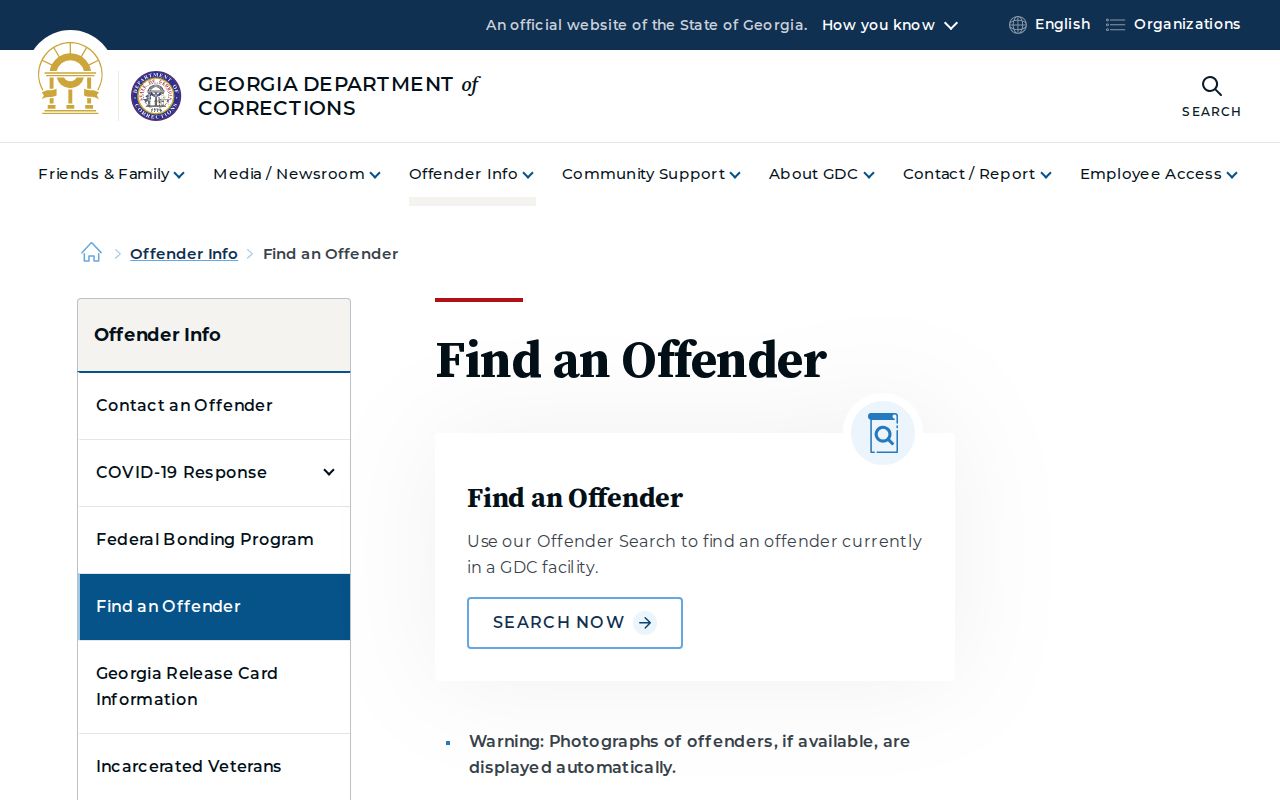
The Georgia Department of Corrections Find an Offender search reaches people sentenced into GDC custody or logged in the state system. It does not reach everyone arrested in Lumpkin County. A person released on bond, held pretrial, sentenced locally, or never placed in state custody may simply not appear.
Start with the full name. GDC's FAQ suggests that a tricky name may search better with the first four letters of the surname plus an all-offenders choice instead of active-only results. A hit can show a state or EF identifier, crime information, a tentative parole month, and the current institution. Those fields help separate people who share a name.
Some profiles carry an offender photograph, though GDC warns that many images are unavailable or not yet uploaded. A missing picture means little by itself. A GDC image reflects state custody, so don't label it a Lumpkin booking photo without official provenance.
The GDC search page shows the state-prison track that follows the county jail lookup rather than replacing it.
When a state photo is not online, a focused GDC Open Records request can name the offender and state ID. GDC pledges an initial reply within three business days, charges ten cents per nonmedical copy, and bills labor at the lowest-qualified employee rate, subject to exemptions and lawful redaction.
Where Busted Records Go After Release
When a name drops off the roster, the reason is not always obvious. It could be release. It could be a transfer, a citation issued instead of jail intake, a change in custodian, or a plain display limit. The answer rarely comes from the roster itself. A record request resolves part of the question, and a court search resolves the rest.
| Custody state | Where the record lives |
|---|---|
| Just booked or in county custody | The LCSO portal may return a current or selected-date row. It does not show a public photo in the observed configuration. |
| Released from Lumpkin custody | The current roster may no longer show the person. Request the booking record or associated photograph from the custodian, and use the court file for the outcome. |
| Sentenced to state prison | GDC becomes the relevant custody search. Any GDC photo belongs to that state record, not automatically to the county intake event. |
| Federal or immigration custody | Use BOP or ICE when the record establishes that federal custody state. Neither is a Lumpkin County mugshot feed. |
A name vanishing from the roster could mean release, transfer, a citation instead of jail intake, a new custodian, or a display limit. The record request and the court search each answer a different piece of that puzzle.
After a Lumpkin County Booking
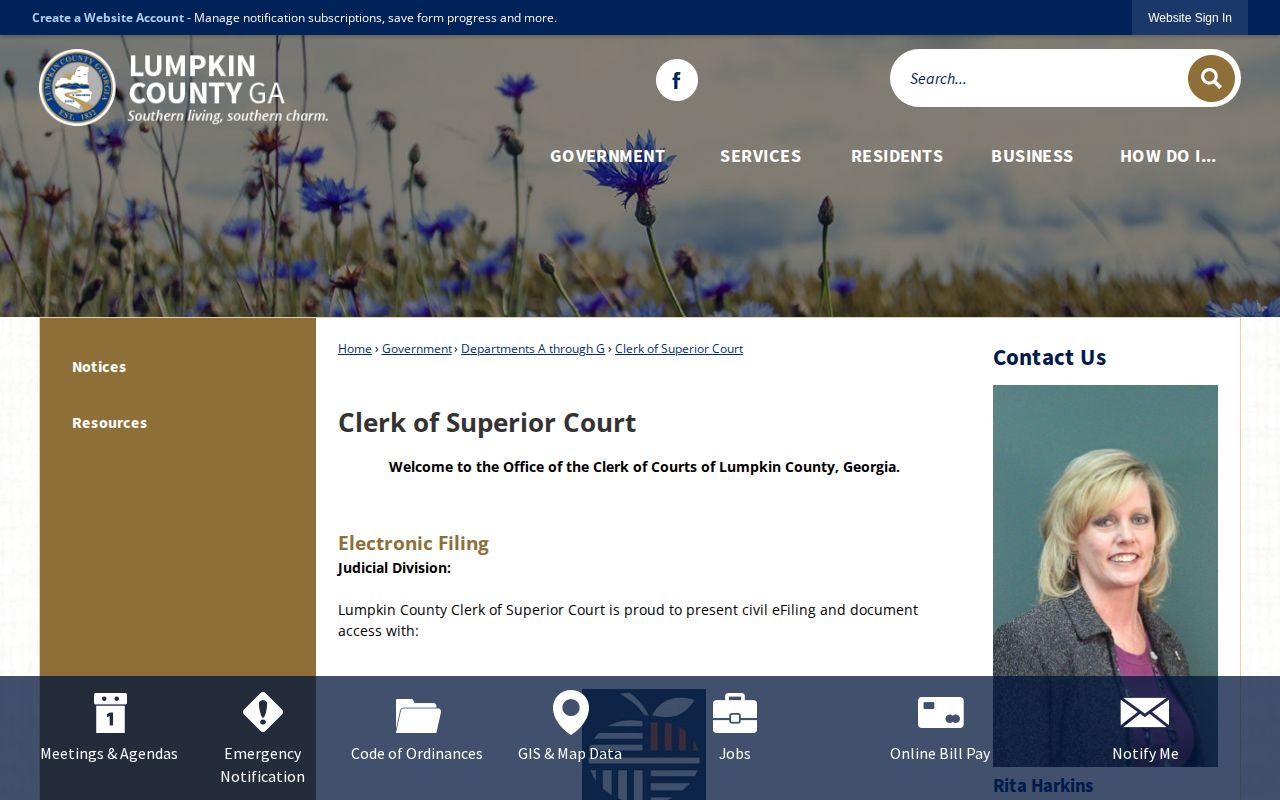
The booking row is the start of the case trail. The Lumpkin County Clerk of Superior Court holds criminal files for the courts it serves. The office is at 325 Riley Road, Room 108, Dahlonega, Georgia 30533, with a listed phone of 706-864-3736 and weekday hours of 8 a.m. to 5 p.m., excluding holidays. Georgia Courts e-access lists Lumpkin Superior Court and warns that a provider account may be required.
Use a case number when possible. A filed accusation or indictment, arraignment, motion history, plea or trial result, dismissal, sentence, and restriction order are separate events. Dahlonega Municipal Court handles general misdemeanor criminal cases, traffic, and municipal ordinances in its jurisdiction. It meets monthly and does not advertise a public case-search portal. A signed citation is not an admission of guilt.
The Clerk's official page is the right starting point for the court record that follows a Lumpkin County booking.
When an online provider comes up empty, call the clerk. Ask which court holds the case outcome. Filing and indexing can lag behind real events, and a municipal matter will not show up on the Superior Court path no matter how often you look.
Does a missing roster entry mean no arrest happened? Not necessarily. The person may have been cited and released, transferred, or booked by another custodian. They might simply fall outside the portal's public range. A bounded LCSO request and a report from the arresting agency each answer a different piece of the puzzle.
- Booking
- Administrative jail intake after an arresting agency brings a person to detention and custody is accepted.
- Arraignment
- A court event where the case and charges are addressed; it is not itself a conviction.
- Bond
- A court-ordered release condition or financial undertaking while the case continues.
- Disposition
- The court's recorded outcome, such as dismissal, plea result, acquittal, or conviction.
- Record restriction
- A legal limit on public criminal-history access for qualifying matters; it is not automatic destruction of every copy.
Note: News, a roster row, or a booking photo can show an allegation; the court record shows whether the charge changed, ended, or resulted in a judgment.
Federal and ICE Custody Paths
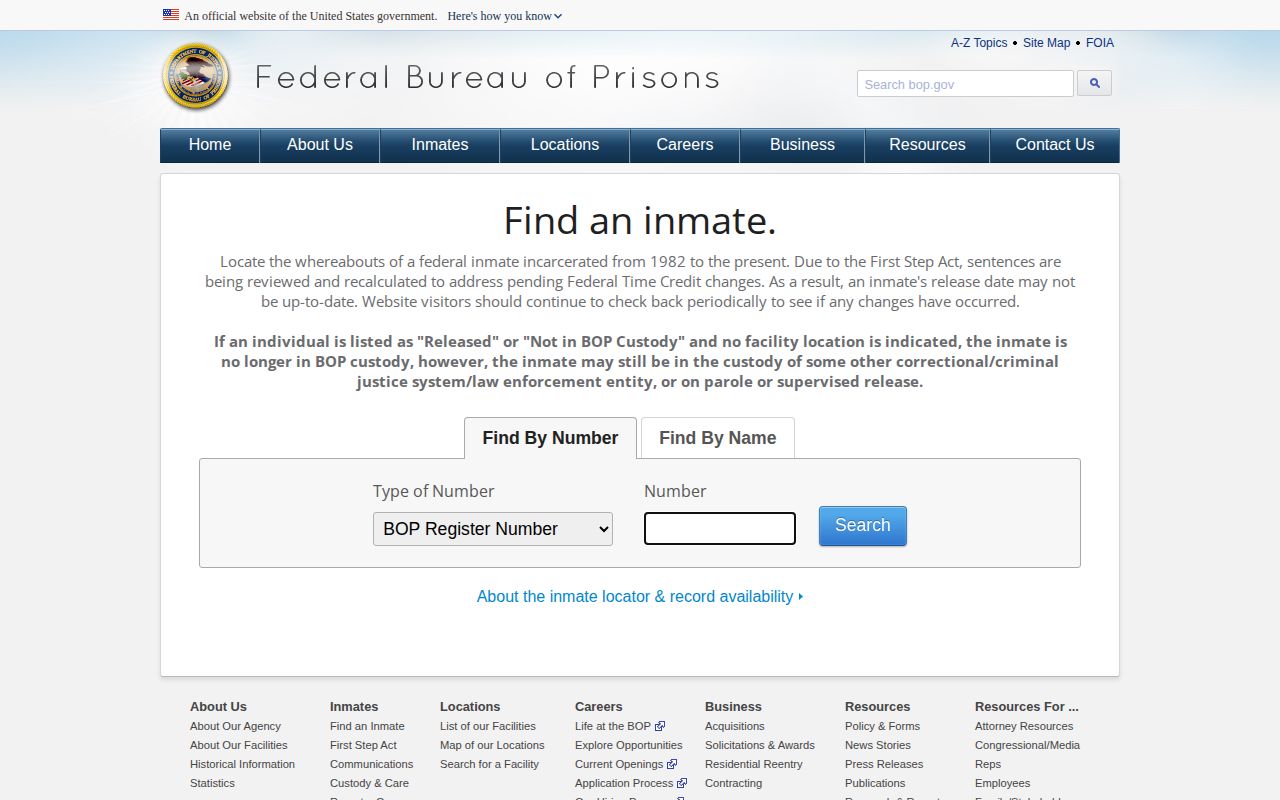
Federal custody runs on entirely different tracks. The Federal Bureau of Prisons Inmate Locator covers federal inmates from 1982 forward, searchable by name and identifying details or by BOP register number. Results can show location and release information. What it will never show is a booking photo. It answers federal prison questions, not Lumpkin County arrests.
Immigration custody has its own tool, the ICE Online Detainee Locator. You need an exact A-number and country of birth, or an exact name and country of birth, to run a search. Records for people already released stay searchable for only a limited window. A routine county hold alone proves nothing about an ICE case; get the record first.
Federal pretrial custody adds another wrinkle. The U.S. Marshals Service often houses people in contracted facilities with no nationwide public locator. The federal court docket and the responsible custodian are the right sources there, with BOP taking over once someone is sentenced to federal prison. Keep all of these systems separate from GDC and the LCSO roster.
The BOP locator interface shows why federal custody and county booking records should never be mixed.
Federal and immigration locators can tell you where someone is held. What they cannot do is turn a county booking into a federal record or hand you a public mugshot gallery. Those are different records, kept by different agencies, under different rules.
Note: BOP and ICE results describe separate custody systems, so a missing federal result says little about a county arrest.
Dahlonega Busted Mugshots Route
Dahlonega is the only incorporated municipality in Lumpkin County. That means a single city path to track rather than a list of neighboring towns. Dahlonega Police Department handles enforcement inside the city and posts monthly aggregate department reports, not a named arrest blotter or a daily photo feed. Once DPD arrests are accepted into county custody, the person lands in the Lumpkin County Detention Center system. The Dahlonega Busted Mugshots page walks through that split between the city incident report and the county jail record.
The practical order is simple. Search LCSO for custody status. Ask DPD for the incident or arrest report, then ask LCSO for the jail intake record or any associated photo. The live portal lists DPD and University of North Georgia Police as held-for agencies. That is why the county roster can matter even when a city or campus officer made the arrest.
Lumpkin Alerts and Social Updates
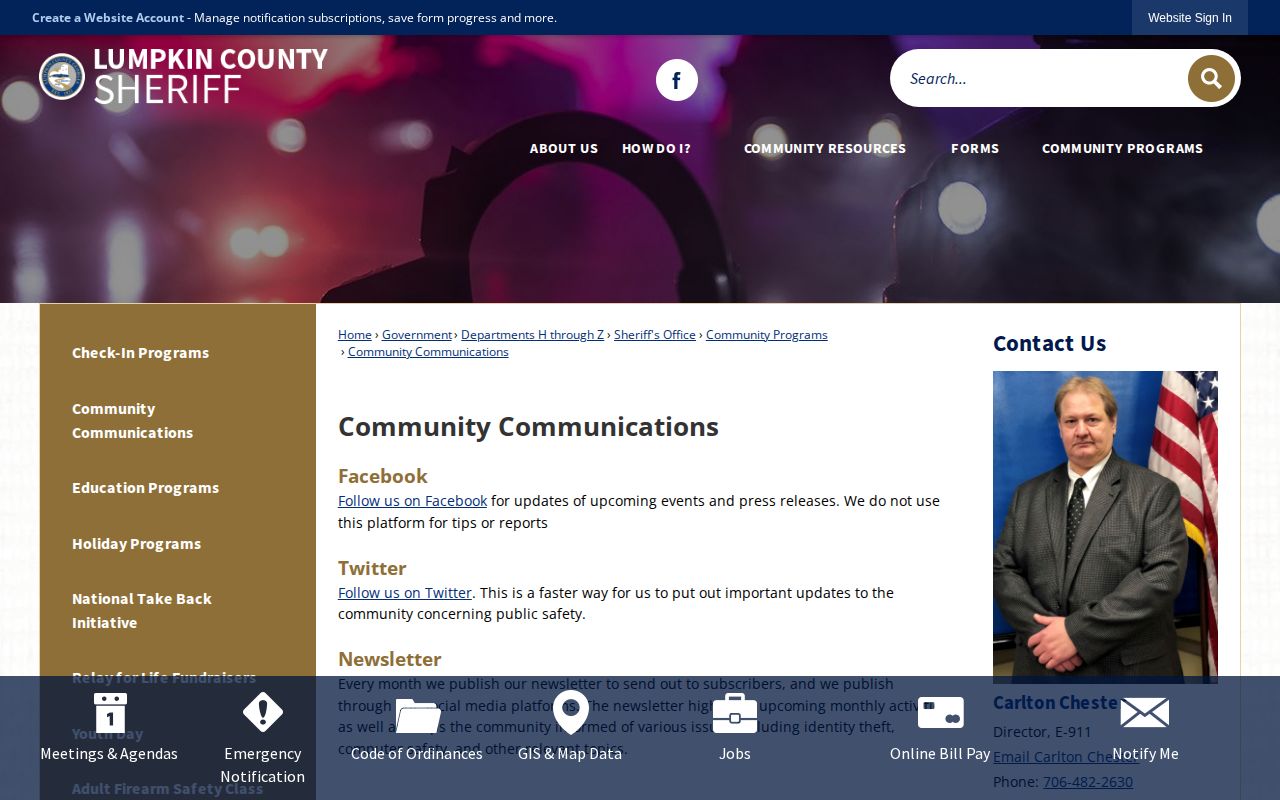
LCSO has no official jail mobile app. Public updates go out through its website, Facebook, X/Twitter, a monthly newsletter, and CivicPlus notices. Press releases and safety notices run across those channels. None of them is a full booking ledger, release tracker, or photo archive, though. The Sheriff's Community Communications page is blunt on one point: Facebook is not for reports or tips. The LCSO community communications page lists the official social and notice channels.
Got something to report? Use the official tip form or the recorded tip line, not a social media comment. Danger happening right now belongs with 911. For victims and families, Georgia V.I.P. offers post-sentence notifications, and the Georgia VINELink landing page should be checked for current county participation before anyone counts on an alert. A notification service is not a custody search; the two answer different questions.
Note: Social posts can be timely and useful, but an episodic announcement cannot establish that the county's custody records are complete.
Old Lumpkin Records and Retention
Georgia Archives sets minimum retention rules for local agencies. It does not decide what goes online. Schedule LG-19-060 keeps jail booking records and related data for at least ten years after release. LG-19-061 covers jail registers for ten years past the last entry. Photos are a different matter. Booking photographs have no separate series in the schedule, so check photo retention with LCSO or records staff. The Georgia Archives jail-booking schedule is the source for that distinction.
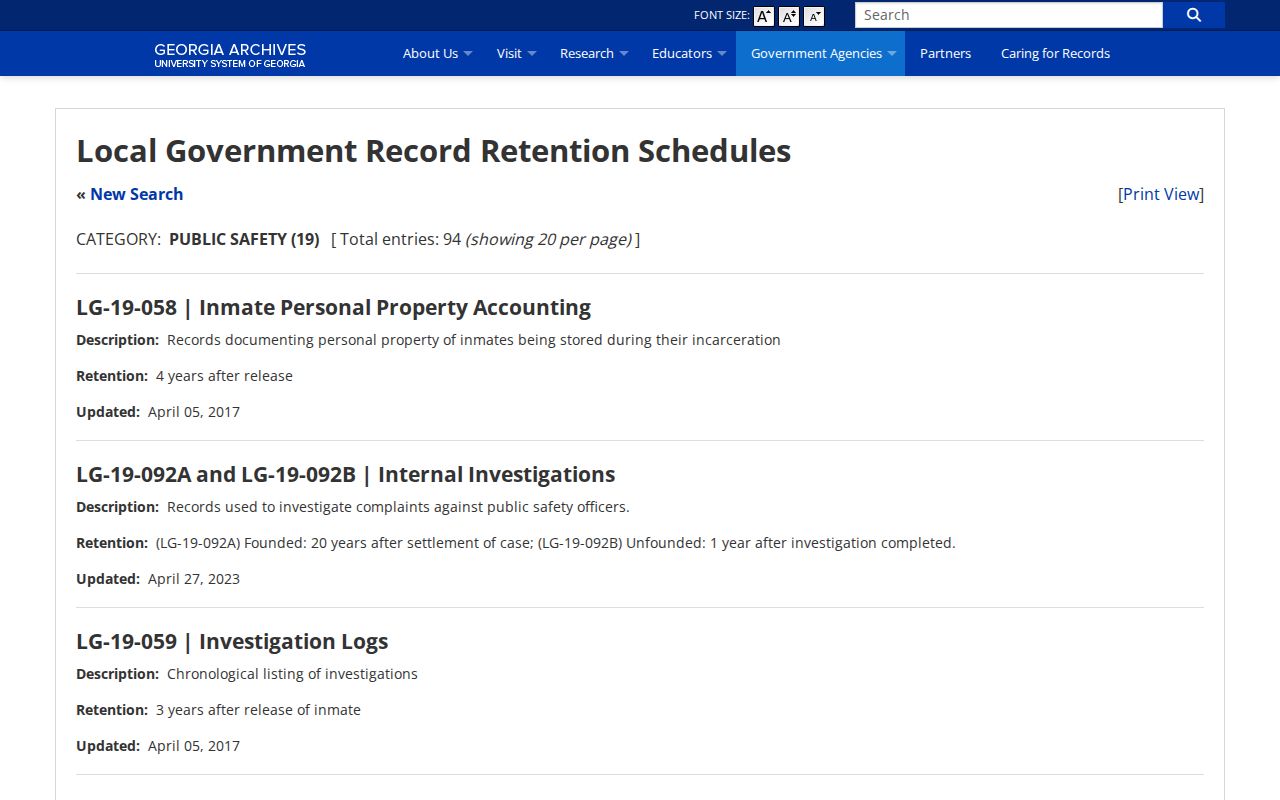
Retention rules trip people up. An agency might keep a file for ten years offline while the online roster row disappears far sooner. The flip side happens too: once a retention minimum passes and any required hold lapses, the record can be legally destroyed. Where do you start? Current matters go through LCSO. Court outcomes belong to the Clerk.
Digging for genuinely old holdings is a different task. The Ask an Archivist form at the Georgia Archives works well once you can name the specific record series you want. There is no central Lumpkin mugshot gallery, though. Archivists can tell you what a finding aid shows, and nothing more, so don't expect them to produce a booking photo the catalogs never listed.
Note: Retention is an agency-custody rule, while online visibility is a separate publication and configuration question.